2025: The year of the sophomore novel
"Reading the Room" columnist Serena Puang looks back on critically acclaimed authors who released their second novels in 2025.
When it’s your first time doing something: trying a new hobby, accomplishing a big milestone, or even a break-up, people go out of their way to help you. They hype you up, they offer support and cheer on your successes. The second time, it’s like haven’t we been here before? But for many things, it being the second time doesn’t make it less significant, like the publication of a book.
2025 was the year of the sophomore novel. So many authors who released best-selling/critically acclaimed books in the early 2020s dropped their second books: Carolyn Huynh (“The Fortunes of the Jaded Women”), Sanjena Sathian (“The Gold Diggers”), Nikki Erlick (“The Measure”), Charmaine Wilkerson (“Black Cake”), and so many more.
I have this theory that a large portion of sophomore novels are the thing that an author wanted to write in the first place, but wasn’t allowed to during the first go around. Maybe it’s more niche or more serious, or maybe it just didn’t fit into their original proposal.
The result is sometimes less commercially successful, and it’s a little bit of a chicken-or-the-egg situation as to why, because most sophomore novels also have a quieter release and a much smaller marketing budget. It’s like being a sophomore in college: most of the same problems, much less support.
But the authors are wiser the second go around, or at least they know what they’re getting themselves into. They know how they work, they know what their writing process is for a writing project of this magnitude, and I think there’s a confidence that comes from that which is apparent in the work.
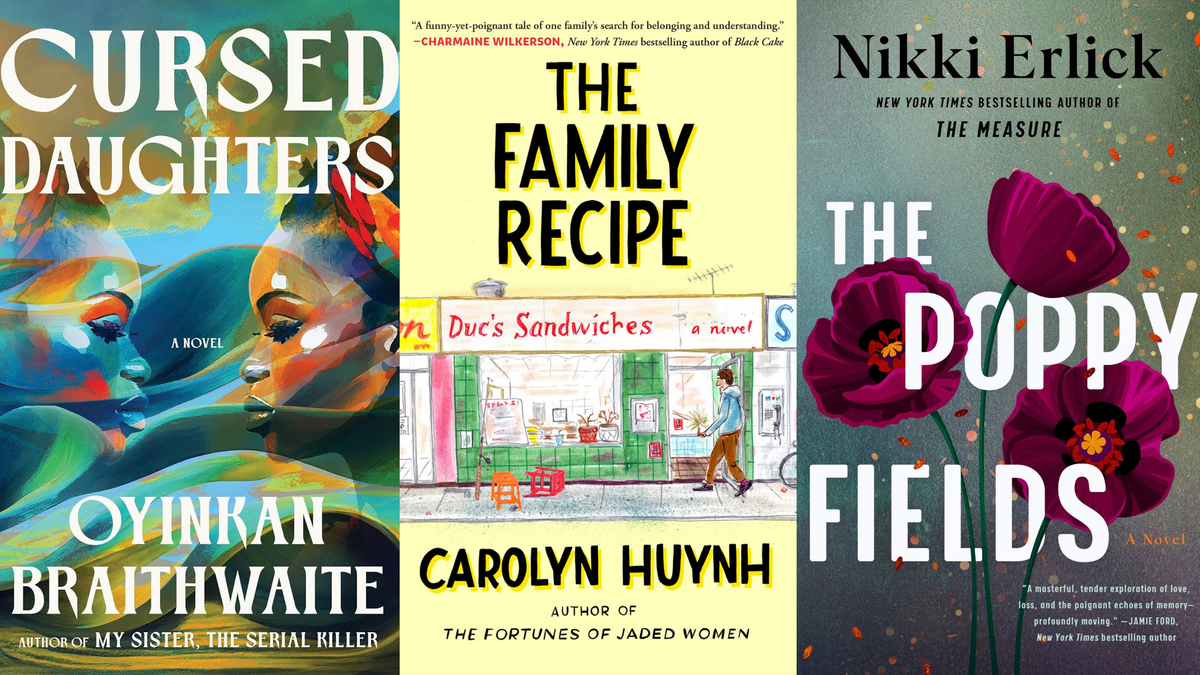
Among the 2025 sophomore novels, a particular standout is “The Family Recipe” by Carolyn Huynh, a multigenerational and multiple-POV novel about five estranged children of an eclectic sandwich chain founder racing for their inheritance. The four daughters must move to different cities to revive run-down shops in Little Saigons across America: Houston, San Jose, New Orleans and Philadelphia, but if the firstborn son, Jude, gets married first, he gets everything. Those who know Carolyn Huynh’s “The Fortunes of Jaded Women” know she’s no stranger to writing about messy Asian American women and their lives or multi-generational novels, but beyond a dramedy about inheritance, “The Family Recipe” is also a historical fiction story about Vietnamese fishermen in Texas in the 80s who sued the KKK and won.
Huynh’s characterizations are stronger in “The Family Recipe” than in her debut, and the book is a well-paced and beautifully told story that engages in a difficult moment of history while also having thoughtfully placed moments of levity. Huynh writes in her acknowledgments that the journey toward this second book was full of anxiety.
“The sophomore slump is real, I fear,” she writes.
But it doesn’t show. This book might have had a quieter release than her first, but it deserves the same, if not more attention.
In a similar vein, “Cursed Daughters,” a sophomore novel by author Oyinkan Braithwaite, is a lot more serious than her debut, “My Sister. The Serial Killer.” It actually has a similar plot to Huynh’s first book in that it centers on a generational curse about love, but in “Cursed Daughters,” one of the dual protagonists, Eniiyi, is thought to be the literal reincarnation of her aunt, Monife. Eniiyi’s extended family members are terrified that she will repeat her aunt’s tragedy, but despite their best efforts, she makes some of the same mistakes out of love. Curse or not, it’s a beautiful reminder of what it means to love despite not knowing if it’ll work out.
Of course, changing up your style or genre is a risk. Maybe your readers won’t like this second work as much or maybe they won’t follow you. Nikki Erlick’s “The Poppy Fields” is an interesting story about four strangers hoping to sleep their grief away, but it lacks the gut-punching emotion of her debut, “The Measure.” Other books were okay but not for me; some I struggled to get through, but maybe for another reader, this is exactly what they needed.
Braithwaite writes a note to the reader as a preface for “Cursed Daughters,” explaining that this book feels so different because she feels like a “completely different person from the one who wrote my first novel.” She was single and carefree, living in Nigeria while writing her first book. She’d moved, was married and pregnant, and dealing with upsetting news about her father during the second.
It’s important to remember that behind our favorite books, the authors are living lives of their own. They’re growing, hitting milestones, experiencing disappointments and heartbreak too. We grow up on their work, and they grow with us. Here’s to another year of growing together.