Finding Home: How Amielynn Abellera threads Filipino identity on screen
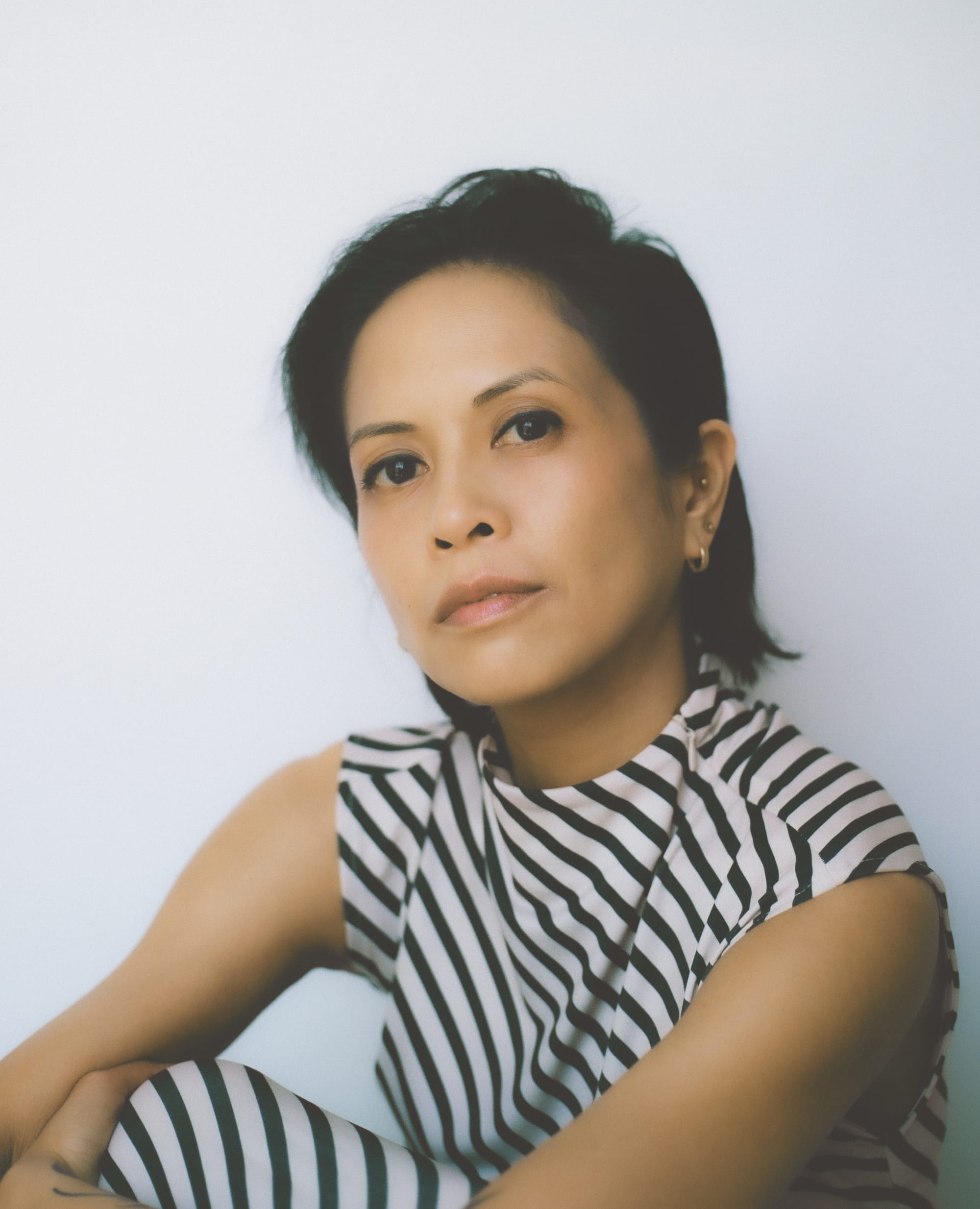
Amielynn Abellera, who portrays Filipino Muslim Perlah Alawi in HBO Max's "The Pitt," reflects on why authentic representation of Filipinos matters more than ever.

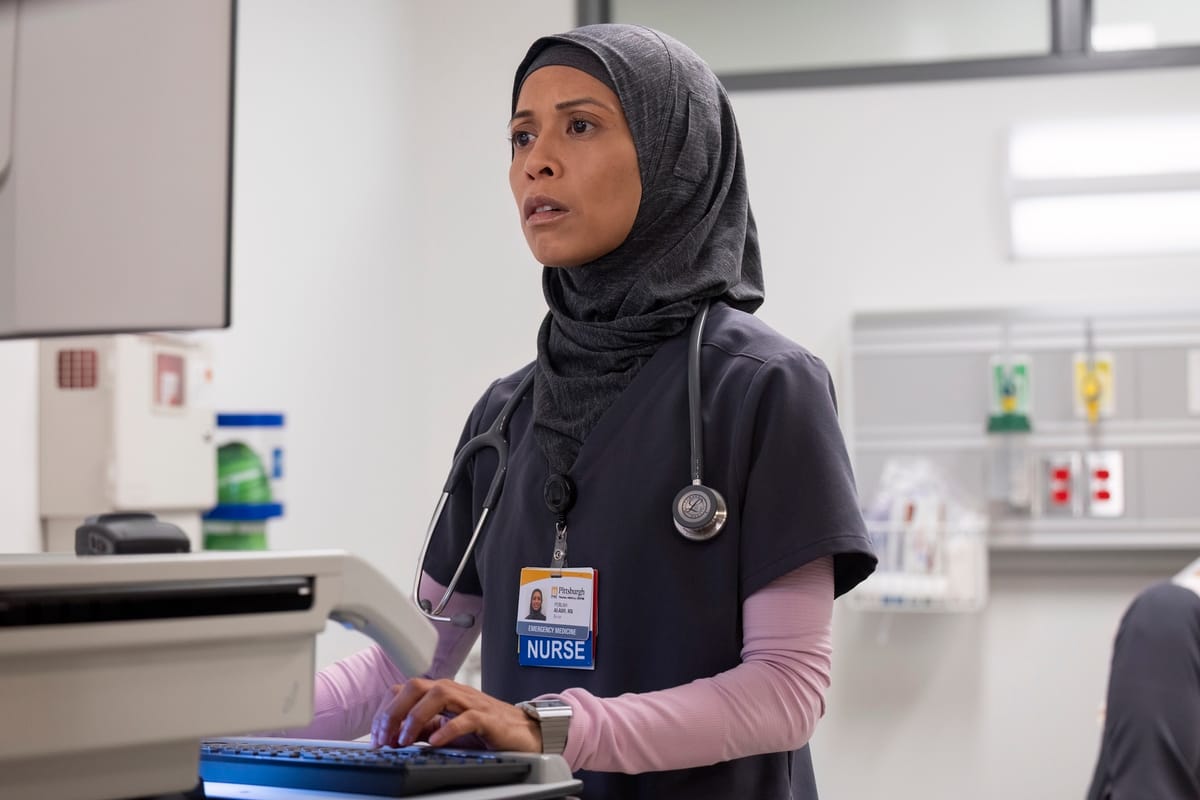
On her first day on the set of “The Pitt,” Amielynn Abellera stepped onto what looked like a fully functioning hospital. A whole floor, humming with monitors and machines, sterile light and simulated urgency. It should have been clear it was a set, a slice of fiction, except not entirely.
“It felt so real and I had a sense of familiarity,” Abellera said. “I come from a family of health care professionals, and I’ve been in hospitals a lot growing up. I always accompanied my dad doing his rounds and my mom was an ICU nurse for many years.”
A scent, a fluorescent flicker, a childhood memory embedded in muscle. In that moment, the role of Perlah Alawi — a Filipino American nurse who storms into the show’s first episode with Tagalog and defiance — didn’t feel like a part she landed. It felt like a return.
Abellera’s path to this moment was neither linear nor inevitable. Born and raised in Stockton, California, to Filipino immigrant parents: a physician father from Baguio and a nurse mother from La Union, she grew up surrounded by both medical rigor and storytelling.
Though initially drawn to science, earning a Bachelor of Science in psychobiology at Santa Clara University, her pull toward performance proved irresistible, leading her to a Master of Fine Arts in Acting from the University of Southern California.
Since then, she has built a dynamic career across television, film, and voice acting. This year, she stepped into her most high-profile role yet as Perlah Alawi in the medical drama “The Pitt,” playing a seasoned ER nurse. Off-screen, the actor is a devoted partner and mother.
When I sat down with Abellera, our conversation opened into something deeper: a gentle unearthing of her layered relationship with representation and identity. Now, as the show gears up for its second season, Perlah doesn’t just carry new surprises for viewers. She also reflects the renewed sense of Filipino pride that Abellera is learning to reclaim for herself.
When visibility arrives late
Before “The Pitt,” the Fil-Am actor wasn’t searching for a cultural reckoning. She was working, hustling, navigating Los Angeles auditions, the highs and lows of a creative career. However, what she didn’t have in the past, what many diaspora kids didn’t have, was representation.
“I never saw Filipinos in mainstream media,” she reflected. “That had an impact on how I felt pride, curiosity about my culture growing up, and how I felt celebration. It wasn’t until later in my adult life when I really wanted to learn more and to engage with the culture. That delay in embracing who I am is because there wasn’t visibility and representation for me on screen.”
Her first trip to the Philippines at age 12 was disorienting. Expecting a deep, instinctive connection to the land of her parents, she instead was left feeling more like a stranger than ever. People pegged her as American, and the language and cultural cues reminded her of how out of place she was. The sense of belonging she had imagined remained elusive, leaving her confused and acutely aware of her differences at a young age.
Only in her 30s did the desire for connection emerge. In “The Cleaning Lady,” one of her outstanding roles, she portrayed a Tagalog-speaking head surgeon in Manila, a role that deepened her connection to her Filipino heritage.
“I’m voracious for it now. I want it in my life. I want it in my daughter’s life,” she said.
Filipino visibility has always been paradoxical in America: overrepresented in hospitals, underrepresented in narrative. Hyper-visible in labor; invisible in story.
“For so long, especially in medical shows, we were everywhere in real life yet nowhere on screen. So to be part of what feels like a tectonic shift in visibility feels both profound and deeply honoring,” she said.
So even if it took a while for these to catch up, Abellera’s arrival in that emergency room, on our screens, feels well timed — though, perhaps, a little late is just part of the Filipino rhythm.
Perlah as an unexpected bridge
When Abellera played for Perlah, something lit up. In the opening scene, she and her colleague slip into Tagalog to call out their attending physician.
“It was day one of filming, and I was so happy that that was my first scene,” she said.
Perlah is also Filipino Muslim, a specificity the actor hadn’t encountered before. She felt both thrilled and anxious about the responsibility of representing a minority within a minority. That responsibility reshaped the way she approached the role, guiding her research, outreach, and the care with which she portrayed the character.
Before filming began, she immersed herself in the world of Filipino Muslims, seeking out as many Filipino American Muslim communities as she could find. She spent weeks researching, then reaching out, then listening.
“I found a huge community in L.A. and San Diego and Southern California who were very happy to talk to me about being Filipino American Muslim,” she said.
What began as preparation became something else. A drift toward a community she had never been part of, but one she now felt tethered to.
For Abellera, the work opened a door she didn’t know she needed. She wasn’t just learning about a character; she was learning about a branch of Filipino identity she’d never been taught to look toward.
“There’s a big Filipino Muslim population in Pittsburgh as well. I’m proud for them to be seen,” she said.
Her path back to Filipino identity didn’t happen through the familiar. Not through Tagalog-speaking circles or stories she already understood, but through Filipino Muslims whose histories diverge from hers.
What a great reminder that rediscovering lineage isn’t just about what feels close; it’s about recognizing who else has been carrying the story. Sometimes we learn who we are by listening to people whose lives look nothing like our own, yet share the same roots.
How true cultural return happens not only through sameness, but through meeting the complexity of our people in all their variation. Even small details mattered. Abellera advocated for natural Tagalog lines, consulted on dialogue, and asked questions to reflect both cultural and religious authenticity. These choices were reclamation: not loud but intimate and imperative.
Care as inheritance
The actor’s life, off-screen, has always orbited care. Her own family is a constellation of medical practitioners — father is a physician, her mother served decades as a nurse, aunties and uncles who are dentists, pharmacists, pediatricians, all fluent in the language of tending to others. Portraying one illuminated a truth she’s long carried.
“They are truly heroes,” she said. “They stay raw. They stay present after seeing what they see and do every single day. Every loss opens new wounds, yet they still come to work with so much grace and compassion.”
Something distinctly Filipino about that endurance. A tenderness often carried at the cost of oneself. Abellera is keenly aware of it.
“Filipinos are very attentive and giving … almost to a fault. You can lose yourself in that,” she said.
Perlah, however, complicates that narrative, interrupting that familiar script: in the show, she is assertive, outspoken, funny, refusing erasure even as she cares for others.
Outside the scrubs, she is learning a similar lesson in real time. How to unmask slowly, how to be softer with herself. She tells me she is quieter than her on-screen presence suggests, more introspective, deliberate about where her energy goes.
“For a long time, I got distracted from who I am… what I really want, what I want to say yes to.” I understood that confession. How easy it is to inherit a life of service and forget that you are not the vessel, but the person inside it.
Motherhood became a recalibration. Her 5-year-old daughter, Sampaguita, is her uncomplicated joy. And like many of us raised to give first and receive later, Abellera is aging into the truth that care offered without boundary is merely depletion in disguise.
“Filipinos don’t know how to ask for help or say no,” she said, not as an indictment but an admission of the work ahead.
A role as a map home
Abellera is writing a script, in her mind and on paper, about a Filipino and a Filipino American meeting each other.
“I’m not sure if it’s a romance or a friendship but I do love the thought of exploring those two types of Filipinos who have such very different experiences and connections to the same culture … it feels like a map of myself,” she shared.
It’s a project that could bridge and shed light on Filipinos in the Philippines and those in the diaspora: connected by heritage, but separated by experiences.
“I feel so distant and isolated from the Philippines,” she said. “But I also have longing and admiration and desire now, as an adult, to embrace that.”
Next year, when Abellera steps into Perlah’s shoes again for the second season of “The Pitt,” she carries more than a character. She brings forward her family’s lineage of health care workers, the diaspora’s archives of Filipino Muslim communities, and her own evolving sense of self.
Belonging isn’t a singular place or identity, but something we keep circling, keep reaching for, whether from the islands, the diaspora, or the screens where our stories finally appear.