‘Bad Asians’ dissects Asian American views on success and shame
Lillian Li offers a story that doesn’t over-explain, allowing characters to exist fully.

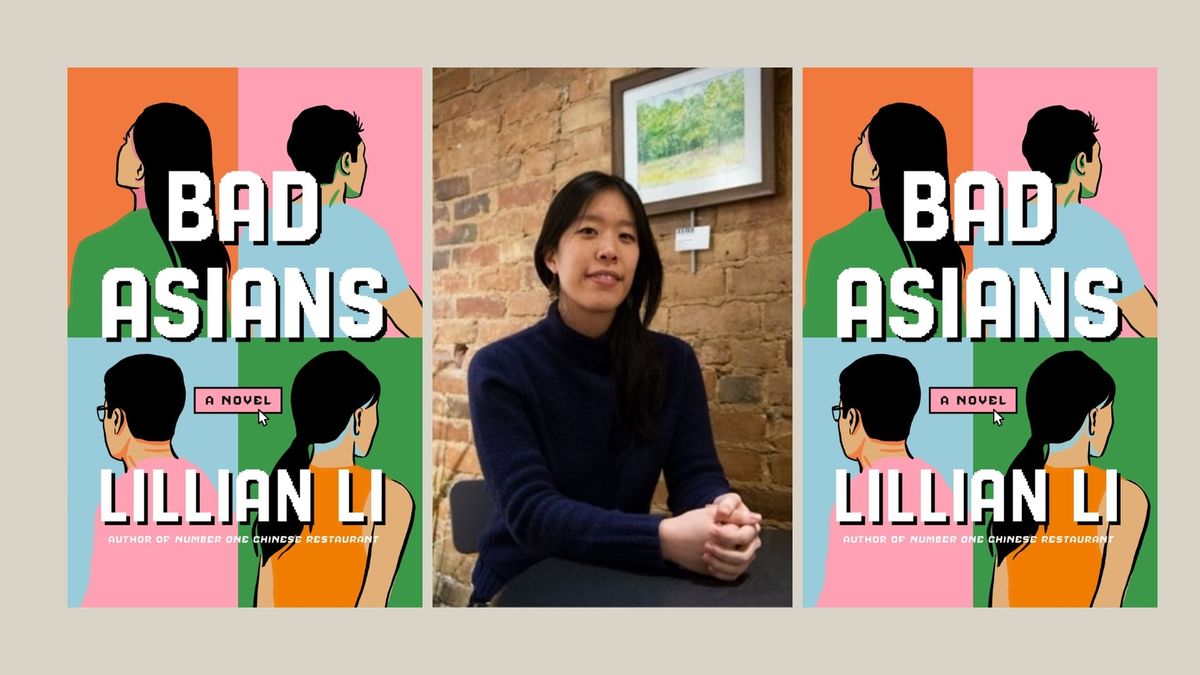
Growing up Asian American, there are three kinds of Asians: Good Asians, Bad Asians and the ones who have the luxury not to care. In Lillian Li’s most recent book, “Bad Asians,” everyone is a bad Asian.
Li’s novel centers around four friends: Diana, Justin, Vivian and Errol and their former academic rival/frenemy, Grace. When they were all in middle school, Grace filmed the four of them talking about their dreams and academic futures. Nine years later, after doing everything “right,” they graduated from college into the 2008 recession and all independently ended up moving back in with their parents, unemployed. Then Grace comes back to town. She wants to revisit the project, but when she abruptly leaves in the middle of filming, the friends think it’s dead in the water. That is, until a YouTube video is published under the title “Bad Asians.”
The group suddenly finds themselves catapulted into Wong Fu-style YouTube fame, except everyone hates them. The video was edited to caricature their personalities, and it’s not a great look for potential employers or for their image within the Chinese American community. For the rest of the book, the friend group has to navigate that.
All this seems to imply that “Bad Asians” is a plot-driven novel, but it’s not. The book moves through different perspectives (except Grace’s) and seems to intentionally make the parts of the novel where they actually do anything bad less dramatic than one would expect. Even the most scandalous parts of the plot seem to pale in comparison to the dramas we regularly scroll past on our timelines today. That might just be a sign that every part of the internet has gotten more dramatic since 2009, but I think it’s a choice.
The thing about being a “Good Asian” is that it’s not about the actual milestones and markers of success – no matter how much we try to pretend it is. These characters go to Harvard, get high-paying jobs (at some point), and are plenty filial, but they get to the top, and there’s nothing there but another mountain to climb and more people to impress. The concept of “Good” or “Bad” Asians is about perception. It’s not enough to succeed, to get into the perfect school or dominate in extracurricular activities; the myth of the “Good Asian” is a carefully constructed fiction that makes one above reproach among the gossip mill of one’s insular community. To be a “Good Asian,” one would have to not just embody the stereotype but make everyone believe they’re doing a good job 100% of the time. And that’s just not how real life works.
A conventional path for this kind of story to take is to show the inner lives of these “Good Asians” complete the nitty gritty side of their home lives (a la “The Joy Luck Club”) illustrating that there’s more to everyone’s story. Li gives us some of that without treading well-worn paths. There’s trouble in paradise for the two characters who have been together forever, one character is exploring his sexuality, and a lot of gifted burnout and projecting due to being pit against each other is laced throughout the book. “Bad Asians” shines in its ability to paint vignettes of second-generation Chinese immigrants in Maryland that are distinct and resist stereotypes even in their striving. None of them are angsty about their language skills. This is a book that’s for Asian Americans. It doesn’t over-explain cultural nuances and doesn’t let anyone stay in a box of good or bad.
But the book falls slightly short in its efforts to weave these compelling portraits together. The storytelling is hard to follow at times due to the shifting third-person points of view, the number of main characters, along with their parents’ backstories/gossip. The friends and Grace often make decisions that don’t make a ton of sense given the circumstances.
Despite this, Lillian Li has delivered an interesting read featuring second-generation Chinese Americans in all their messiness. Maybe they’ll give someone else the permission not to care what kind of Asian they are.